Dust, pollen and ash
The loose layer. Dry summers and open ground put a fine film on everything, and fire-season ash sits on the glass until something moves it. Rain shifts the loose part and leaves the rest.
Placer County, California
ServicesSolar panel cleaning
A solar array is glass over live electrical equipment. It collects dust, pollen, ash in fire season, bird droppings and the chalky film that sprinkler overspray leaves behind — and rain rinses the loose dust off while leaving the film. It is the one surface on the property where the gentlest method is the only method.
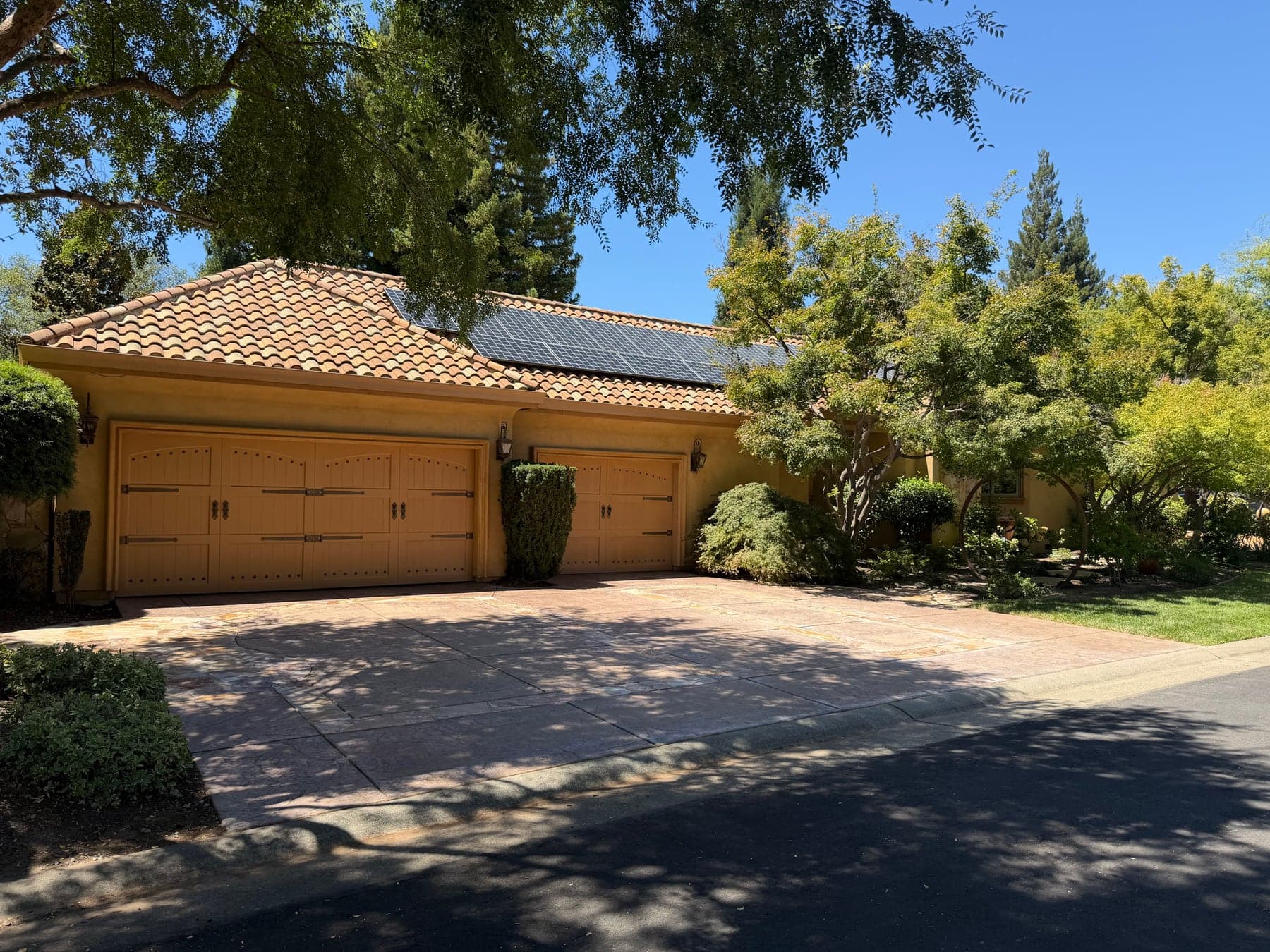
The loose layer. Dry summers and open ground put a fine film on everything, and fire-season ash sits on the glass until something moves it. Rain shifts the loose part and leaves the rest.
Sprinkler overspray dries on the glass and leaves minerals that rain never removes — the haze on panels that get rained on all winter and still look dull in June. How much of it a pure-water wash lifts is set out at the assessment, not promised in advance.
Droppings shade the cell beneath them and etch if they sit. They come off with the wash. Nests and debris under the array are cleared where reachable; keeping birds out of the space under the panels is a different job, and we tell you what we found.
Panels share a roof with the growth a roof wash treats, and the tiles under the panel edge soil faster than the rest of the field because runoff from the array concentrates there. Booked together, the roof gets its soft wash, the array gets its pure-water clean, one visit and one written report covering both. The strong chemistry is for the roof surface around the array — never the glass.
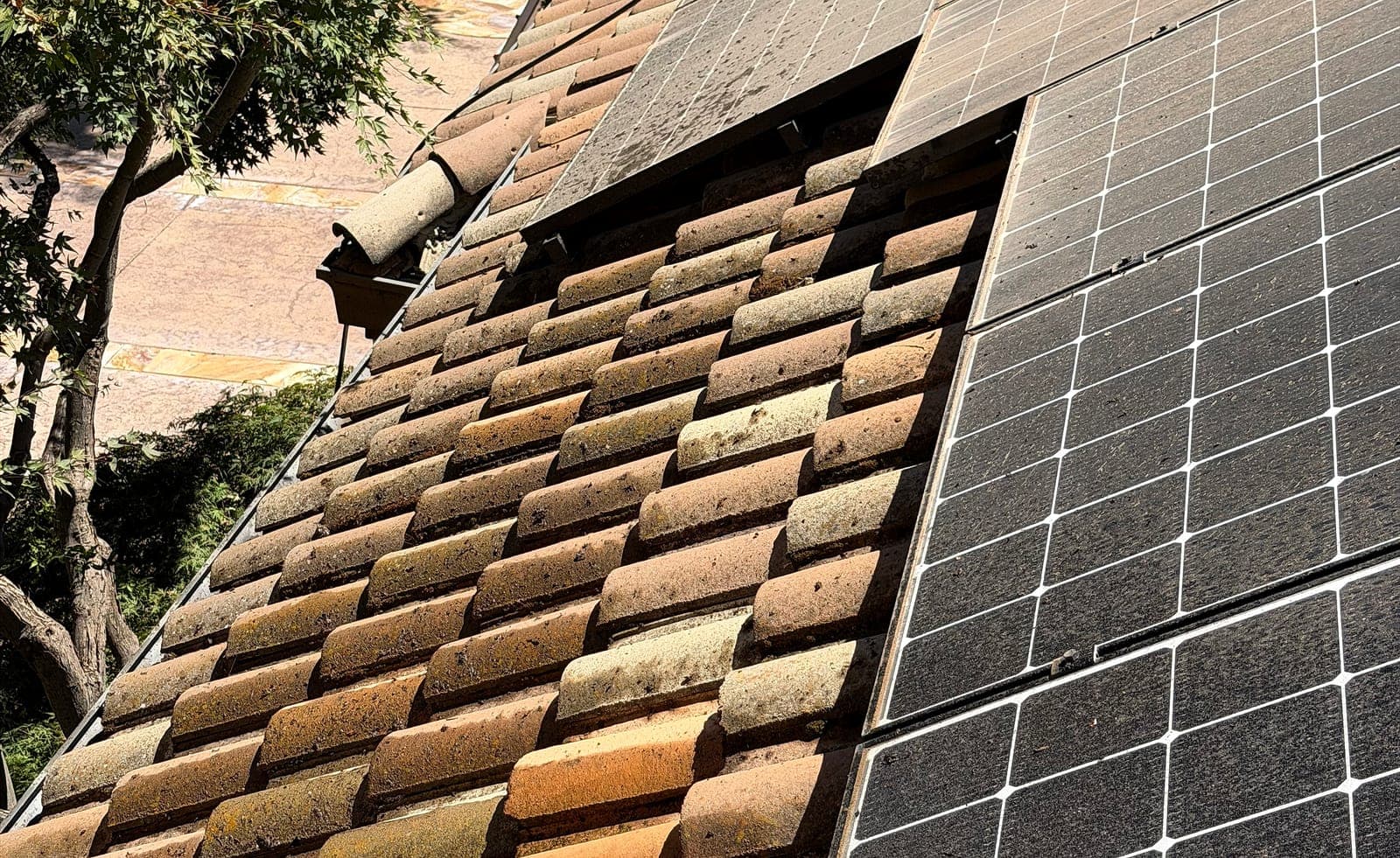
We don't quote an output percentage. Dust and film sit between the sun and the cell; how much that costs you depends on the array, the tilt and the season, and anyone giving you a number without measuring your system is guessing.
Scratched, hazed or cracked glass is not something cleaning fixes. If we see it, it goes in the report.
Your landscaping and propertyNo detergent and no pressure ever touch the glass. The system is off before we begin and stays off until you switch it back on. Landscaping below the array is pre-wet before any roof work around it and rinsed after.
Rain takes the loose dust off. It does not take off the hard-water film, the pollen paste or the droppings, and those sit between the sun and the cell. A pure-water clean removes what rain leaves behind.
The two moments that matter here are after the spring pollen and after the dry summer. Arrays under trees, near sprinklers or on a bird's flight path ask for it sooner. The assessment tells you which applies.
No. Pressure can crack cells and force water past the seals. Nothing stronger than pure water and a soft brush touches the array.
Yes — you or your installer shut it down before we start and turn it back on after. We never operate the system, and the job does not start until we've confirmed it is off.
Yes. A dropping shades the cell under it, and left long enough it etches the glass. They come off with the wash; we also clear what we can reach from underneath the array and tell you if birds are nesting there.
If we cleaned it and didn’t get it right — a missed spot, bad prep, something we forgot — we come back and fix it. No charge, and no time limit on that.
What we can’t promise is to remove what isn’t dirt. Permanent staining, oxidation, rust pitting and etching are in the material itself, not on top of it. We’ll tell you which is which before we start, not after.
Solar panel cleaning across Placer County, plus Folsom. See what we notice in Folsom, Lincoln and Rocklin — or across every city we serve.
Not sure what your property needs? That’s what the assessment is for.
We’ll personally follow up within 1–2 business days.